Stop Pretending Struggle Is Noble
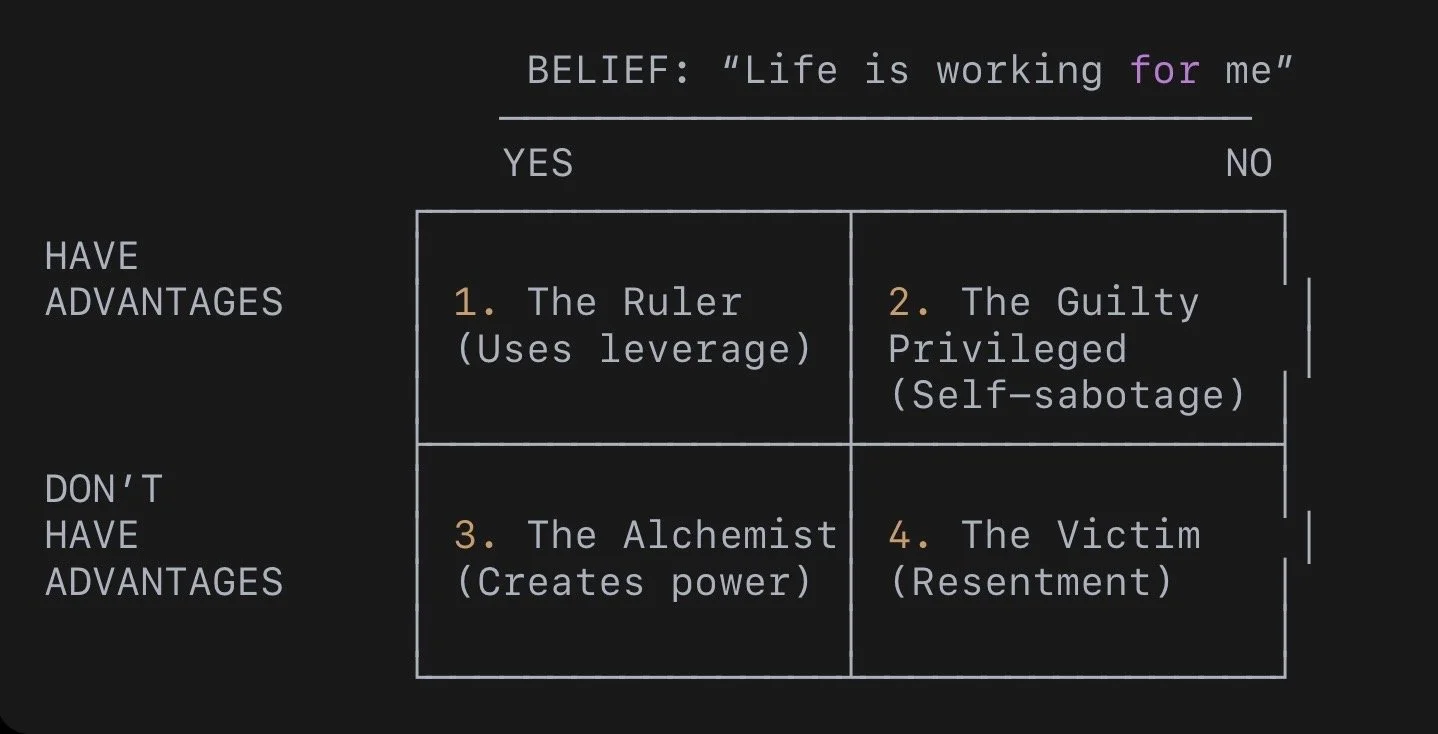
The Unfair Advantage: Stop Cosplaying the Underdog
We love underdog stories.
Starting from nothing.
Back against the wall.
“Against all odds.”
The hero who came from nothing.
The rose that grew from the concrete.
It feels noble.
It feels romantic.
It feels earned.
But here’s the uncomfortable truth:
There’s nothing noble about choosing the harder path
just so we can feel like an underdog.
If we already have advantages
and we refuse to use them
that isn’t humility.
That’s ego wearing a mask.
What we call “noble suffering” is often just self-sabotage
Some of us were given unfair advantages:
good looks
wealthy family
connections
zip code
strong network
great mentors
genetics
lucky timing
None of those make us bad people.
If we’re aware of the hand we were dealt
we can learn to play it well.
If we’re unaware
we get passed by someone hungrier
who started way behind us
and didn’t waste any time feeling poetic about struggle.
Success doesn’t ask where we started.
It asks what we did with it.
When privilege refuses to compete
There’s a strange thing that happens:
Someone with every advantage
might play life on “hard mode” on purpose.
They avoid using their connections.
They refuse help.
They turn down shortcuts.
They secretly want to be “tested.”
They want to be the underdog anyway.
It looks noble on the surface.
But most of the time?
That isn’t virtue.
It’s pride.
The universe isn’t asking us to suffer unnecessarily.
It’s asking us to steward what we were given.
Use the leverage we have.
Build leverage where we don’t.
Both can exist.
When someone has nothing… and chooses to believe they have everything
Now there’s the other story.
Someone starts with no clear advantages:
no money
no family resources
no network
no perfect timing
no obvious talent
But they decide:
Everything is working in my favor.
Every setback is training.
Every delay is preparation.
Every difficulty becomes part of the story.
They believe:
“I wasn’t cursed with obstacles.
I was gifted with reasons to become strong.”
They choose to see their situation
as the best hand possible
because it forced them to learn how to play any hand.
That mindset is the unfair advantage.
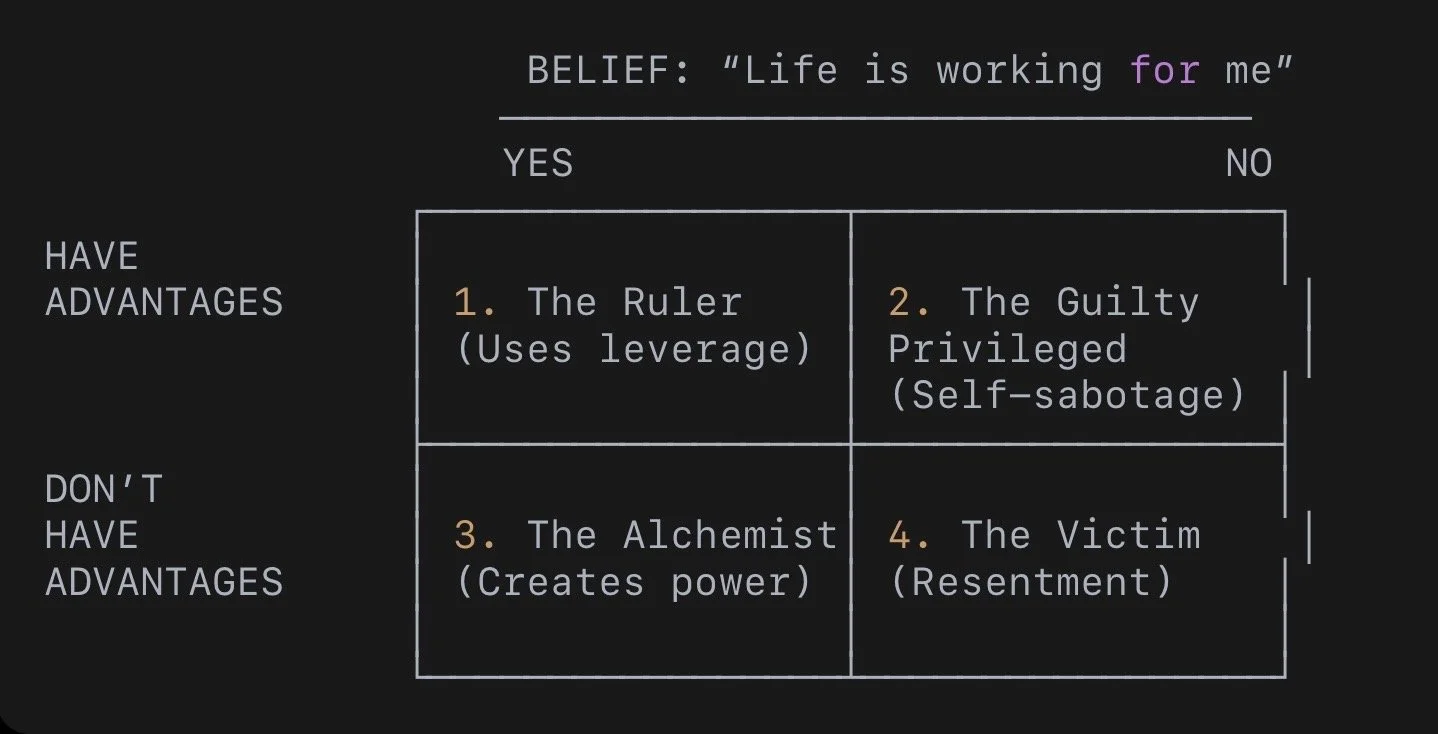
The Advantage Mindset Matrix
Two variables shape outcomes:
1. Do you have advantages?
(resources, looks, network, timing, capital, support)
2. Do you believe the world is working in your favor?
(mindset, ownership, responsibility, agency)
1. Has advantages + believes life is working for them
(The Ruler / The Steward)
This is the rarest and most powerful quadrant.
They:
acknowledge their advantages without guilt
use leverage responsibly
stay hungry and grateful
don’t cosplay struggle
don’t apologize for winning
They understand:
“What I was given isn’t my fault, but what I do with it is my responsibility.”
This is where scale, impact, and legacy live.
2. Has advantages + doesn’t believe they should have them
(The Guilty Privileged / The Self-Saboteur)
This person:
downplays their advantages
refuses help or shortcuts
chooses the harder path “for character”
wants to be tested by life
confuses suffering with virtue
They often say:
“I don’t want to use my connections”
“I want to earn it the hard way”
“I don’t deserve this head start”
Result:
Stalled growth, quiet resentment, wasted leverage.
This isn’t humility.
It’s ego pretending to be moral.
3. Doesn’t have advantages + believes life is working for them
(The Alchemist)
This is the most dangerous person in the room.
They:
start behind but refuse victimhood
treat obstacles as training
turn losses into leverage
believe every delay sharpens them
build advantages manually
They say:
“If I wasn’t given it, I’ll become it.”
Most industry disruptors come from here.
They don’t wait for fairness.
They create momentum.
4. Doesn’t have advantages + believes life is against them
(The Victim)
This is the most painful quadrant.
They:
fixate on what others have
resent systems, people, luck
believe the game is rigged
wait to be saved or validated
leak energy through comparison
Their worldview becomes a cage.
Not because they started behind,
but because they refused responsibility.
The takeaway (the whole model collapses to this)
Advantages matter.
Perspective matters more.
But belief without action is delusion
and advantages without belief are wasted.
The goal isn’t to move diagonally overnight.
The goal is to ask:
What advantages do I already have?
Which ones am I pretending don’t count?
Where am I outsourcing responsibility?
What would change if I assumed life was working for me?
Wherever you are on the grid…
You’re not stuck there.
But only one quadrant compounds.
And deep down, we all know which one it is.
Where are we? What are we going to do about it?
Some of us started ahead.
Some of us started behind.
Some of us were given leverage.
Some of us had to build it from scratch.
But the real questions are simple:
Where are we honestly?
What do we actually have?
What are we pretending not to have?
What advantages are we wasting?
What disadvantages are we over-romanticizing?
And most importantly:
What are we going to do now?
Use the advantages we have.
Stop apologizing for them.
Stay humble. Stay hungry.
If we don’t have advantages
build mindset, skill, reputation, discipline.
Either way…
We are already in the game.
So we might as well play to win.